
Searching Hancock County Criminal Dockets
Hancock County posts no confirmed online docket search for its trial courts. Your best starting point is Circuit Court Clerk Micah Wallen. He handles records for Circuit, Criminal, and General Sessions. The official Circuit Court Clerk directory lists the office and explains its docket duties. Whether you call, write, or visit the counter, ask first whether the case sits in General Sessions or Criminal Court. Offer the case number and filing year if you have them. A full party name and the charge type also help. Skip sending private details the clerk never needs.
The statewide TnCIS system does not list Hancock County among its participating offices. Picking a different county there will not produce a local docket. Public Case History covers only cases that reached a Tennessee appeal. PACER belongs to federal courts. A precise request to the local clerk remains the dependable first move for Hancock County court records.
- Identify General Sessions, Criminal Court, City Court, appellate court, or federal court.
- Gather the case number, year, name, and exact record sought.
- Contact the responsible clerk and ask about inspection, mail, phone, or counter access.
- Request the docket chronology and the actual judgment or order when the outcome matters.
- Ask for certification, cost, and redaction terms before ordering copies.
Hancock Criminal Courts Split Charges
Not every citation lands in the same courtroom. General Sessions takes misdemeanors, preliminary hearings, citations, and similar lower-court work. Criminal Court holds the felony side. That means indictments, trials, sentencing, probation violations, and motions filed after judgment. Sneedville City Court handles city ordinance violations and municipal traffic tickets. Its clerk keeps those records separately. If a case is appealed, it moves to the Court of Criminal Appeals and the statewide appellate history. The trial file itself stays with the originating Hancock County clerk.
| Matter | Starting office | Useful request |
|---|---|---|
| Misdemeanor or preliminary hearing | Circuit Clerk, General Sessions division | Docket, disposition, costs |
| Felony indictment or sentence | Circuit Clerk, Criminal Court | Chronology and signed judgment |
| City ordinance or traffic charge | Sneedville City Court Clerk | Citation date and disposition |
| State criminal appeal | Public Case History | Appellate events and PDFs |
Inside a Hancock County Criminal Docket
Think of a criminal docket as a timeline rather than a story. It can tell you when a charge was filed. It can also show when the accused appeared, which motions were entered, and how each count ended. Hancock forms and clerk duties mention both a case number and docket records. The county publishes no local case-number format. Whatever identifier the clerk gives you, keep it exactly as written. The AOC codes 34A1 and 34A2 are reporting locations only, not public case numbers. Never substitute them in a request.
| Case number and year | Locates the General Sessions or Criminal Court file; formats can differ. |
|---|---|
| Charge or count | States an allegation and statute, not proof of guilt. |
| Appearance and motion | Shows a procedural stage, hearing, or filed request. |
| Plea or verdict | Records how a count was resolved, subject to the judgment. |
| Judgment and sentence | The signed and entered record supplies the operative terms. |
| Seal or expunge notation | Signals an access limit that the public must not bypass. |
The Tennessee courts publish the Rules of Criminal Procedure. That official rules page describes the statewide stages a Hancock County docket entry may reflect.
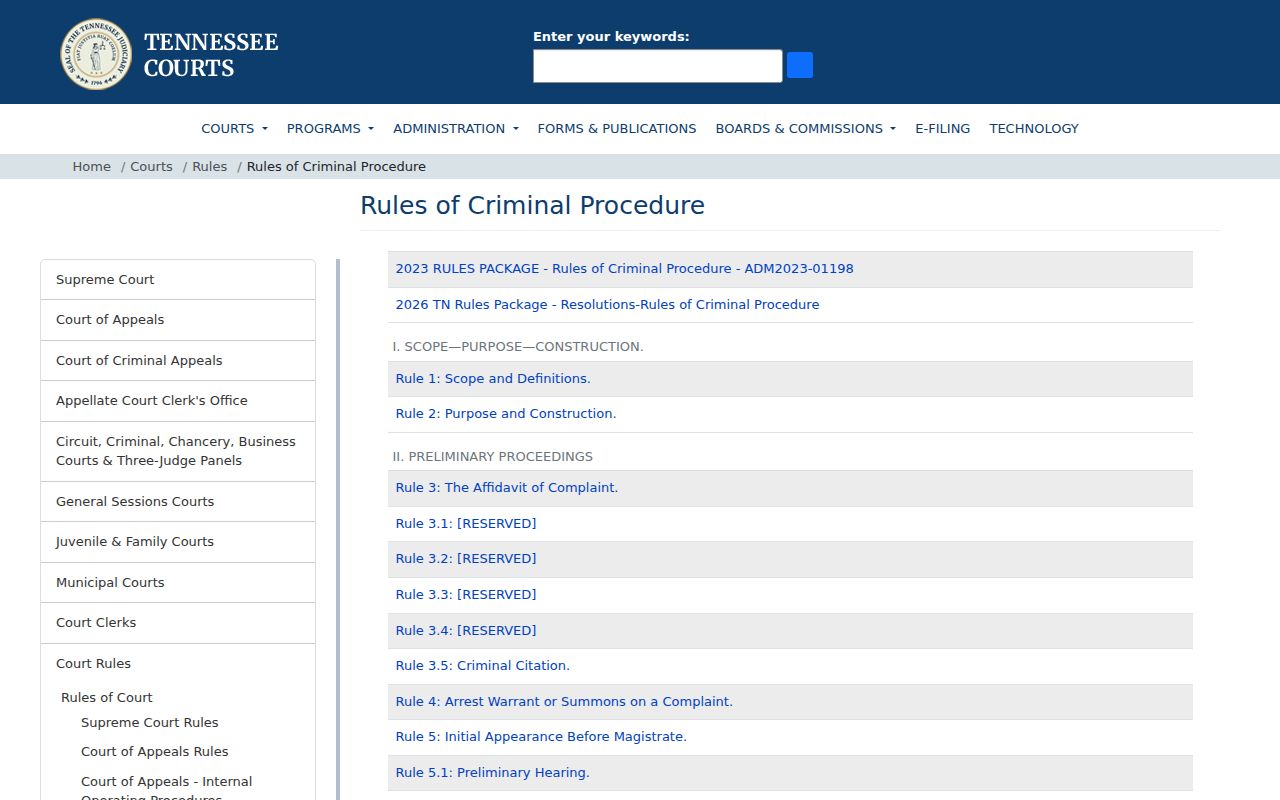
The rules explain what an entry means in general terms. For the facts of one Hancock County case, the clerk's file still governs.
Hancock Criminal Appeals Change Systems
An appeal changes the record system. The Circuit Court Clerk compiles the trial record for review. The case then moves to the Tennessee Court of Criminal Appeals, where Public Case History can show appellate events. That statewide history lets you search by case number, case style, party name, or business and organization. Results can include an event date, an event type, the filer, and an available PDF. It covers appeals within its stated filing-date limits. So it will not show every event that happened in General Sessions or Criminal Court.
Hold both records apart in your mind. The appellate history tracks the review itself. The Hancock County criminal docket and the clerk's file hold the trial-level pleadings, exhibits, judgment, and compiled record. A missing appellate hit does not mean no local case exists. By the same token, an appellate event never replaces the signed trial judgment. Ask the Circuit Court Clerk for the county record first. Then turn to Public Case History only if an appeal was actually filed.
Hancock Criminal Cases by Numbers
The AOC Fiscal Year 2024 report offers scale without naming anyone. Hancock Criminal Court reported 146 filings and 237 dispositions for July 2023 through June 2024. Those are events the clerk reported, not a count of residents or unique defendants. A disposition in that year may close a case filed earlier. Among filing categories, probation violations led at 45. Drugs followed at 26, other motor vehicle at 25, assault at 13, and burglary or theft at 11.
Disposition labels deserve attention too. The report counts 145 guilty pleas as charged. It also lists 69 dismissals or nolle prosequi entries, nine pleas to lesser offenses, four trial convictions, two acquittals, and four diversions. Aggregates like these cannot tell you how any one file ended. For another official statistical view, the AOC Judge Stats portal publishes the numbers directly.
Statistics describe court activity. They do not replace a Hancock County criminal judgment.
How a Criminal Case Moves
A lower-court record often begins with a citation, summons, arrest, or warrant. Tennessee Criminal Procedure Rule 5 sets the timing for the initial appearance. It also sets the timing for the preliminary hearing. That hearing tests probable cause and nothing more; it is not a felony conviction. If the case proceeds by indictment, later Criminal Court entries may show more. They can include arraignment, plea, counsel, bond, motions, and trial settings.
Docket flow: Charge Filed › Initial Appearance › Preliminary Hearing › Indictment › Arraignment › Motion or Trial › Judgment
The official Rule 5 page sets out the first-appearance framework.
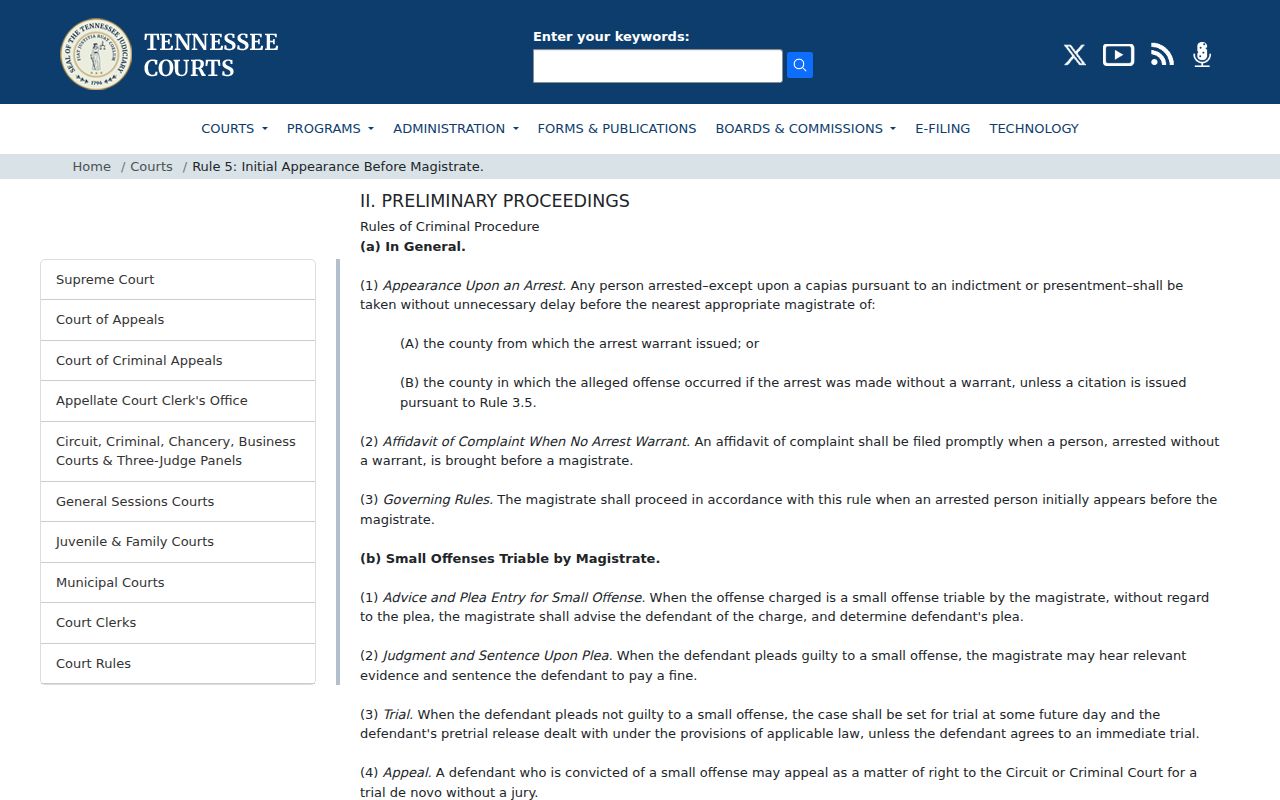
The sequence helps you place a single entry in context. Remember, though, that a reset or a motion does not mean the case has ended.
Hancock Criminal Judgments Carry Outcomes
A docket status word rarely settles anything. "Disposed" only means the court recorded a disposition. "Continued" usually signals that a hearing moved to a new date. "Nolle" means the prosecution dropped the charge. Diversion runs on its own separate track. Even the count-by-count terms can differ inside one case, so when the legal result truly matters, request the signed and entered judgment: Tennessee Criminal Procedure Rule 32 spells out what a judgment holds, from the plea, verdict or findings to the adjudication and sentence.
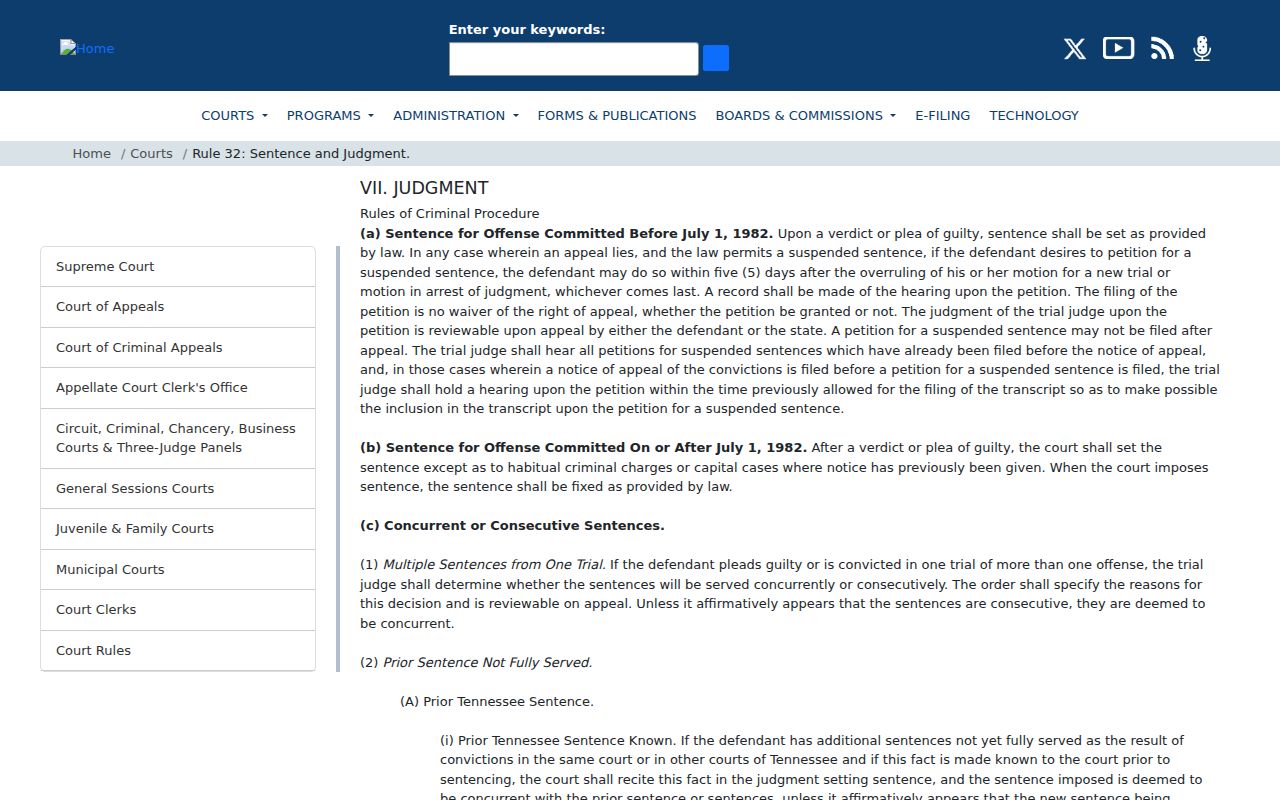
A docket line rarely tells the whole story. The judgment supplies the detail a one-line Hancock County docket event may omit, including the result and the sentence tied to each count.
Courts That Hold Criminal Dockets
According to the AOC, the Hancock County Courthouse houses the Circuit, Criminal, and Chancery Courts. The Circuit Court Clerk sits in court with the docket papers. The clerk keeps the minutes. That office also maintains the rule and execution dockets. It indexes the records and compiles the record on appeal. So start a General Sessions or Criminal Court docket search there. Chancery is not the criminal custodian. Nor is the County Clerk's vehicle portal a court docket. For an appealed criminal case, Public Case History lists the appellate events filed within its scope. A federal prosecution belongs to the Eastern District of Tennessee, Greeneville Division. Reach it through PACER or the federal clerk. The broader Hancock County case lookup explains how these search layers differ.
Hancock Criminal Expungement Starts Locally
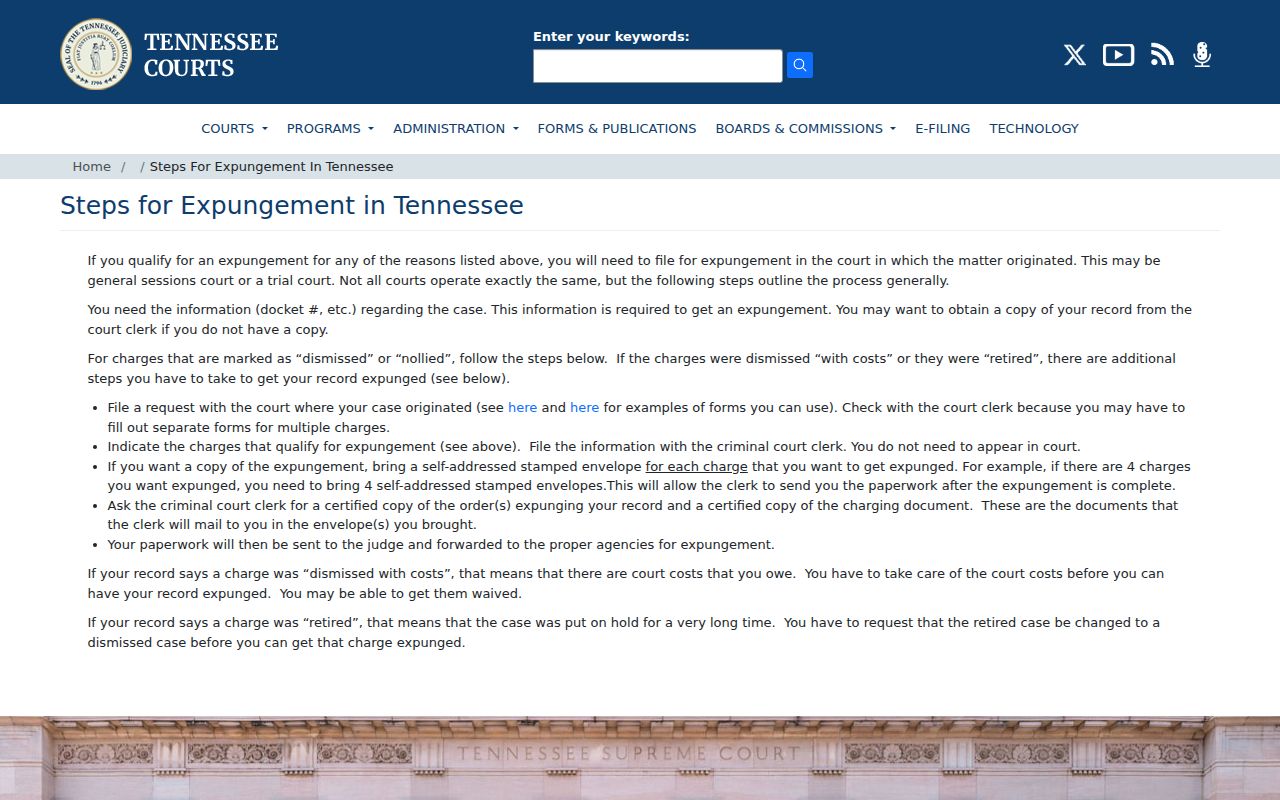
Expungement is more than hiding a page. It does not just seal one attachment either. The AOC sends an applicant back to the court where the case began, often General Sessions or the trial court. Expect to supply a docket number and the charging document. Costs must be satisfied, or a waiver approved. A judge's order is part of the process too. Eligibility rests on Tennessee law and the exact disposition: dismissed, nolle, not-true-bill, or not-guilty matters may get no-cost treatment, while some conviction and diversion categories carry fees. The official AOC expungement FAQ spells out those limits.
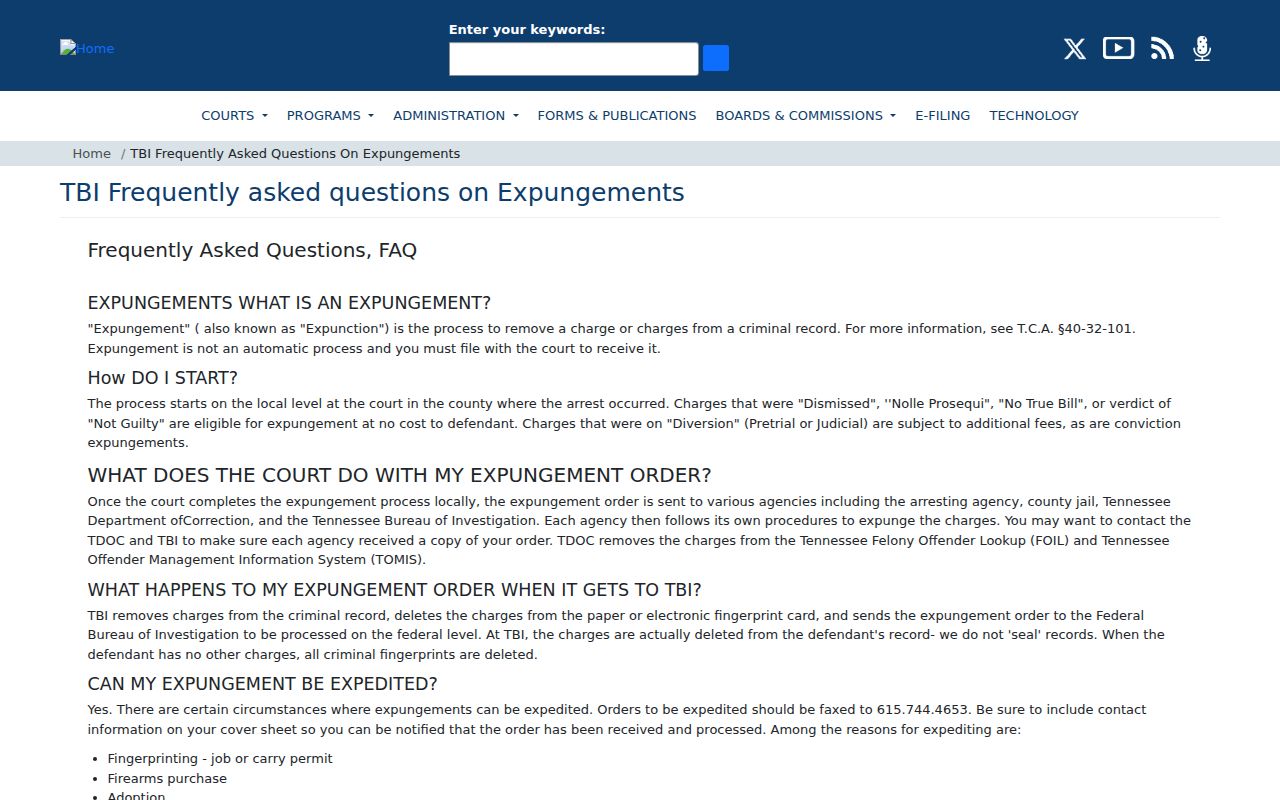
The separate AOC expungement steps show why the originating clerk and docket number matter.
No sample guarantees anything. Neither eligibility nor public access is promised by a form alone, because the Hancock County clerk and court must apply the current law to the actual record.
Sealed Dockets and Public Access
Tennessee Supreme Court Rule 34 backs public inspection of public court records. Statutes, rules, or court orders can still limit access. Sealed filings, victim information, protected medical or financial data, judge work product, and internal case-management material may be withheld or redacted. Juvenile files get stronger confidentiality. Expunged entries are no ordinary name index.
Access rules: Tennessee Supreme Court Rule 34 sets the court-record framework. The official Tennessee Code route provides current text for T.C.A. §§ 10-7-503, 10-7-504, 37-1-153, and 40-32-101.
If a requested item is unavailable, ask the clerk why. Is it sealed, expunged, restricted, or offered only as a redacted copy? Keep in mind that absence from TnCIS proves neither that a Hancock County case exists nor that it does not.