
Getting Hancock County Court Records
Most trial record questions go through the Circuit Court Clerk, whose office covers Circuit, Criminal, and related General Sessions files. Visit at 1237 Main Street, P.O. Box 347, Sneedville, TN 37869. The phone is 423-733-2954, the fax is 423-733-2119, and email reaches micah.wallen@tncourts.gov. Hours run weekdays from 8:00 a.m. to 4:00 p.m. Chancery, probate, divorce, and trust files sit with Clerk and Master Judith H Trent, Suite 104, P.O. Box 347, phone 423-733-4524, email judith.trent@tncourts.gov.
Municipal cases start at the Sneedville City Court Clerk, P.O. Box 377, phone 423-733-2254. A phone call is the fastest way to get routed. You can also inspect a file in person. Request by mail, email where accepted, use the documented Chancery fax channel, or file a formal request under the public-access rules. The county offers no online portal for trial records.
- Name the court and case number or approximate year.
- Describe the exact document or date range.
- Choose inspection, plain copy, certified copy, or transcript.
- Ask about redaction, cost, payment, and delivery.
- Confirm whether another clerk or reporter holds the item.
Hancock County Docket Versus File
Think of the docket as the index. The file is the substance. A docket line says something happened; the papers behind it sit in the file. The Circuit Clerk keeps minutes, indexes, docketed papers, appealed records, costs, and receipts. Hancock County Chancery forms tie the Clerk and Master to filings, hearing notices, and decrees. One caution: a line reading “order entered” does not reveal the terms inside that order. Read the document itself.
| Layer | What it gives | Best request |
|---|---|---|
| Docket printout | Event list | Dates and history |
| Filed document | Pleading, motion, return, or exhibit | Named paper and filing date |
| Signed order | Entered direction or result | Plain or certified document |
| Transcript | Spoken proceedings | Separate reporter inquiry |
Hancock County Court Record Types
A Hancock County case file can hold a wide range of papers. Docket sheets and clerk minutes show up here. So do complaints, petitions, indictments, answers, motions, service returns, subpoenas, exhibits, orders, decrees, judgments, cost bills, receipts, and appellate materials in these court records.
Sound or a transcript may sit with a separate office instead. Electronic filing metadata can show when a paper was accepted. The case-management system is another matter. It is not always open to public view.
- Circuit, Criminal, and General Sessions files
- Chancery, domestic, probate, and trust files
- Sneedville municipal court files
- Tennessee appellate event records
- Separate federal records in the Eastern District
Request the Exact Hancock Document
Ask for one paper, not the whole file. Give the division, the case number with its year, the public caption if it helps, the document name, the event date, the copy type you want, and how it should reach you. No case number? Offer a full name, the case category, and a rough time frame. Keep protected identifiers out of open channels.
Ask for the signed paper. When legal effect matters, request the entered judgment, decree, or order rather than docket shorthand.
The official clerk-role capture shows why the clerk is the first stop.
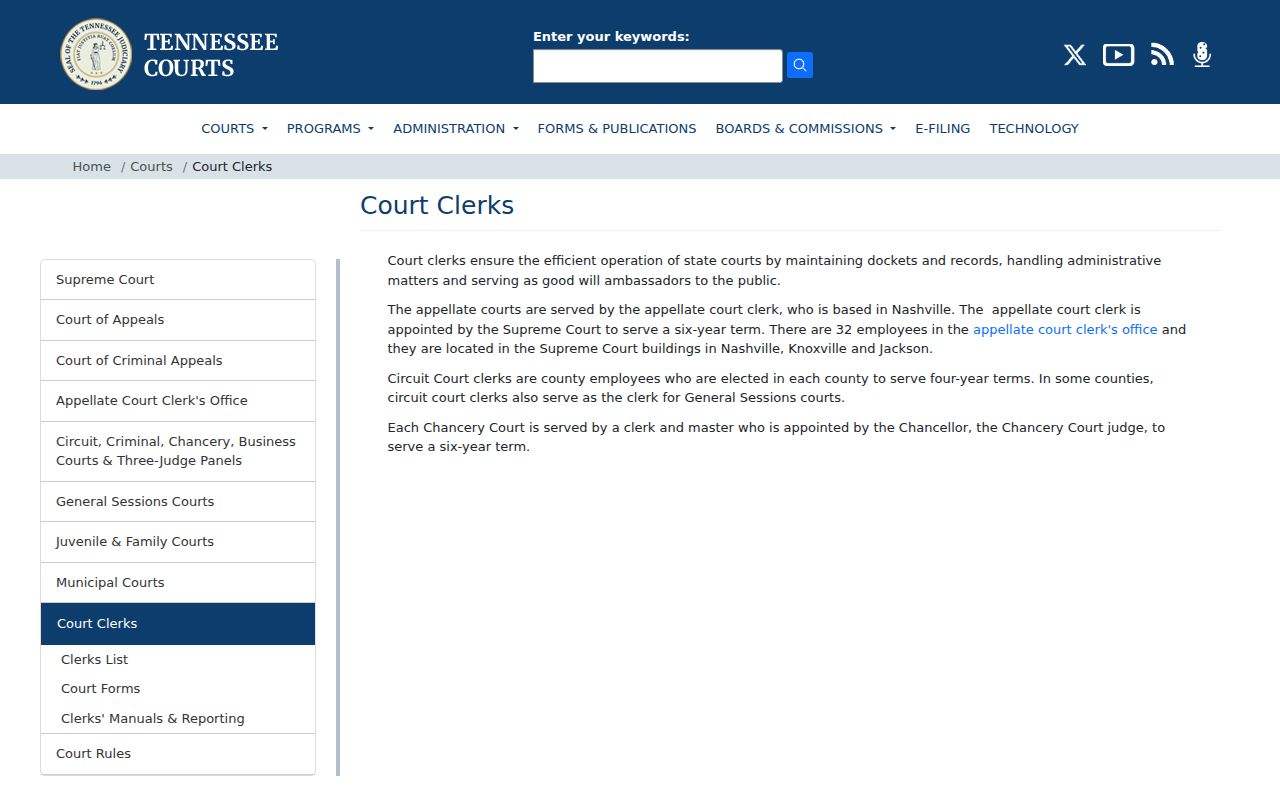
The clerk can tell you whether another division, a reporter, an appellate office, or an archive holds the item you need.
Inside a Hancock County Court Record
Look inside a Hancock County court record. You will find identifiers, filings, settings, clerk actions, orders, and cost entries tied together. One paper can carry several dates: received, signed, filed, and entered may each differ. Service means delivery under a rule. It does not always prove anyone read the paper. A docket marked "Disposed" tells you a result was recorded, not what that result was.
| Case Number | The court identifier used to locate the file. |
|---|---|
| Pleadings | Complaints, petitions, answers, and motions. |
| Orders & Judgments | Interim, final, agreed, or sentencing papers. |
| Docket Sheet | Chronological entries and settings. |
| Exhibits | Attachments, if public and retained. |
Hancock County E-Filing Boundary
Tennessee Rule of Civil Procedure 5B governs electronic filing. It applies in the Third Judicial District's Chancery Court. The rule spells out how to register, pay, sign, give notice, redact filings, handle system errors, and admit evidence. Filing into TnCIS or the court-management system is authorized, though. It is not a public Hancock County search portal. The docket stays with the Clerk and Master.
Fax runs into the same wall. A Hancock Chancery cover sheet asks for the case and docket numbers, title, sender, date, and page count. Payment is due within ten days, and anything over fifty pages needs preapproval. Even then, transmission must be accepted and entered before it counts. Confirm status with the Clerk and Master.
Hancock County Court Record Fees
Know which kind of copy you are buying. A plain copy is reference only, while a certified copy carries the clerk's seal or authentication. An exemplified record, apostille, or transcript may take a separate process. Ask the receiving office what it truly needs. Hancock's Chancery fee schedule is dated July 11, 2024; confirm every current amount with the clerk before you pay.
| Item | Amount |
|---|---|
| Chancery copy | $0.50 on dated schedule |
| Certification and seal | $5 on dated schedule |
| Subpoena issuance | $6 on dated schedule |
| Continuance | $7 on dated schedule |
| Circuit or Criminal copy | Not published; ask clerk |
Hancock County Clerk and Master
1237 Main Street, Suite 104
Sneedville, TN 37869
423-733-4524
Check Hancock County Record Integrity
Check your Hancock County court record against itself. Compare each docket event with the signed order behind it, and look at page count, exhibits, the clerk stamp, certification, and redactions. Note the date you retrieved the file. Note which office issued it. Never pass off an edited court PDF as an original.
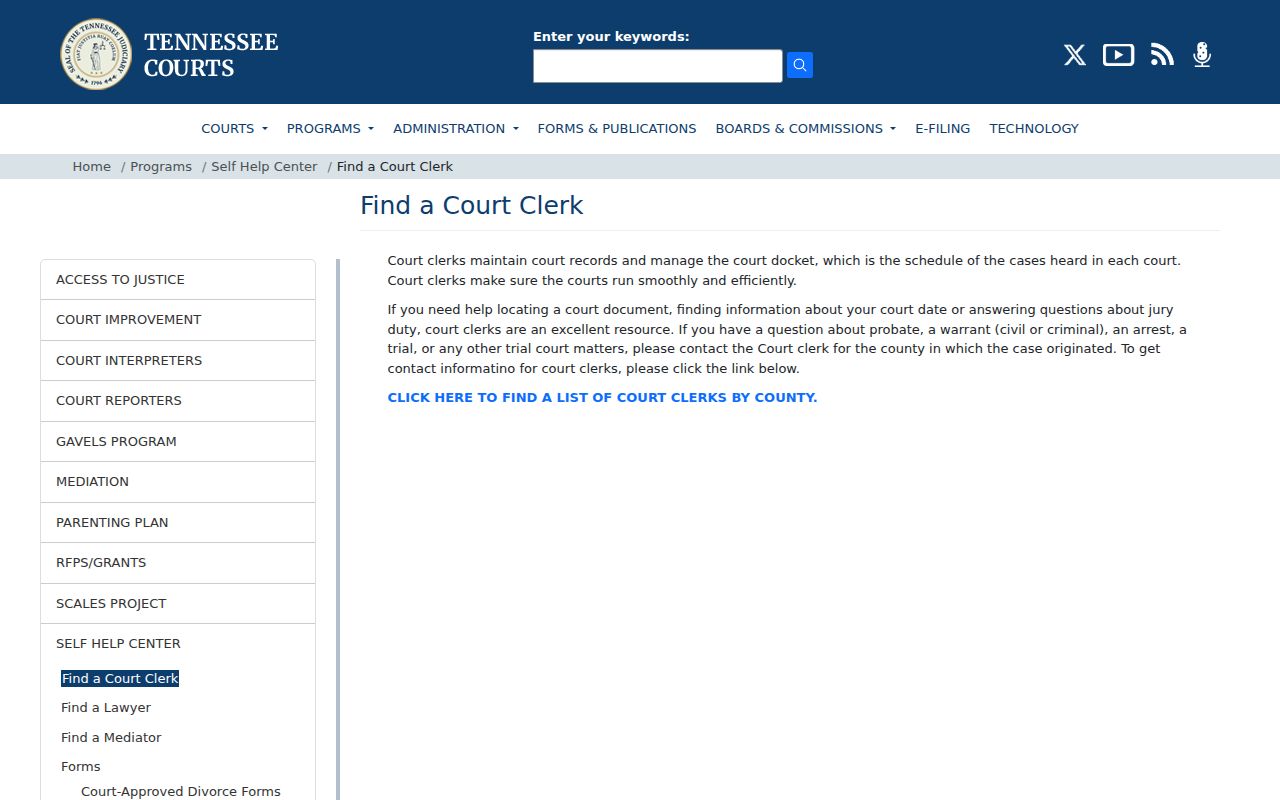
For appeals, check the county file against the separate appellate history.
The Public Case History shows that statewide layer.
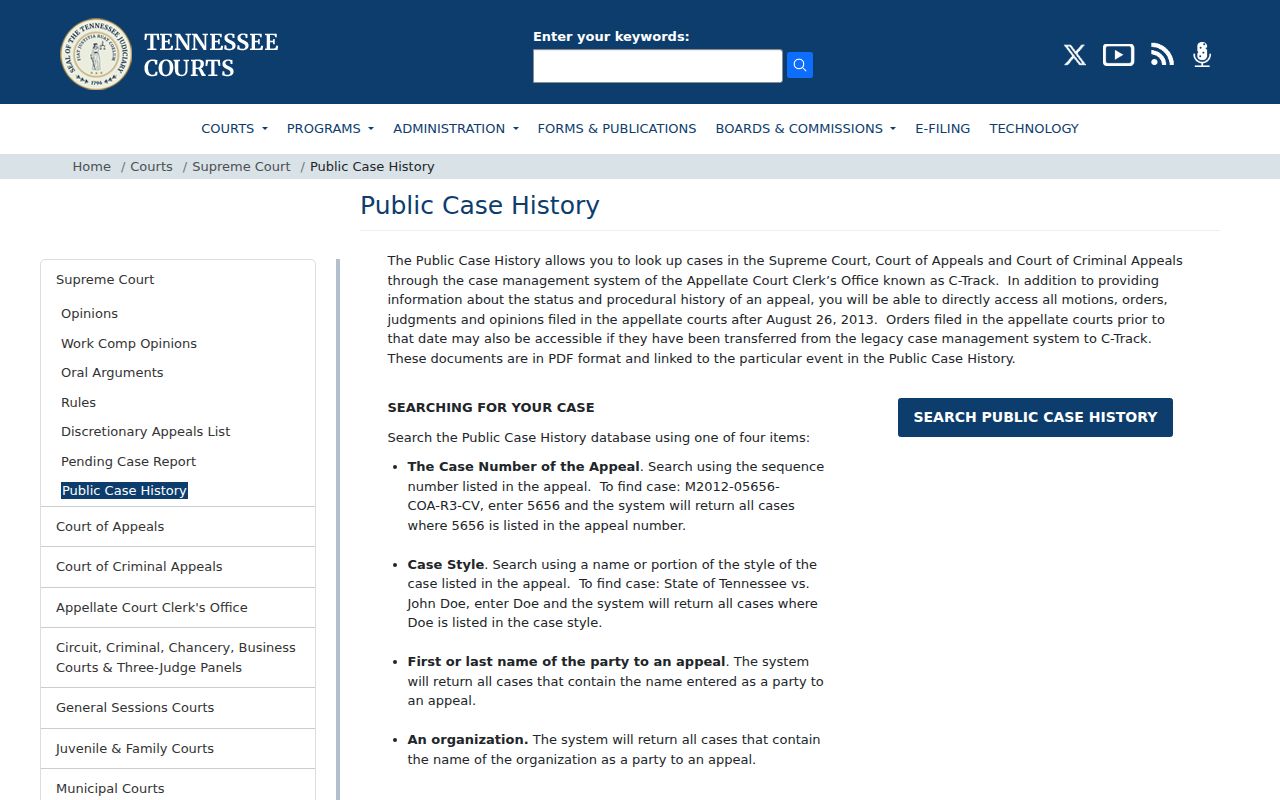
It cannot replace the originating trial file or reporter's transcript.
Sealed Hancock County Court Records
Public access to Hancock County court records rests on Tennessee Supreme Court Rule 34. That rule governs what the docket can show. T.C.A. § 10-7-504, other laws, court rules, and standing orders can narrow it. The official Rule 34 text explains the full framework.
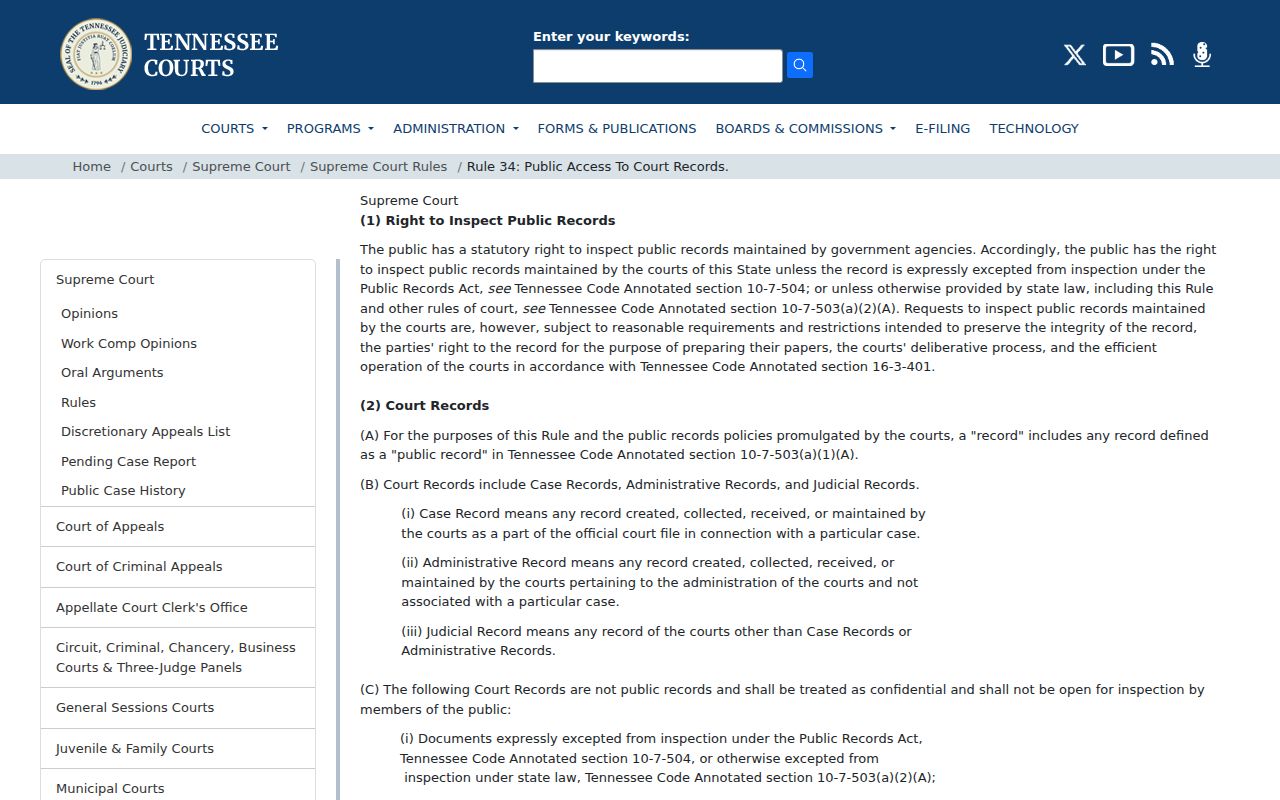
Public access has limits. Some Hancock County court records stay closed by law or by court order. Sealed filings and juvenile records top the list. Victim data, medical and financial identifiers, and judicial drafts may be hidden or redacted. Expunged material and certain family court papers may be hidden or redacted too. Hancock County's own divorce packet shows how this works in practice. The sensitive statistical information gets placed in a sealed envelope. Before you assume a filing is off limits, ask the clerk whether a public redacted copy exists. The legislation page links to the current Tennessee code sources.
Use that primary source instead of an old secondary code page.
Key rules:
Rule 34 governs public court-record access.
T.C.A. §§ 10-7-503 through 505 address inspection, exceptions, and review.
T.C.A. § 37-1-153 limits juvenile access.
A missing online file is not the end of the story. Before assuming a Hancock County court record is gone, narrow the question. Is it paper, scanned, archived, transferred, sealed, or expunged? Does another division hold it? The county has no public trial portal, yet the file usually still exists. Older material often sits in storage until staff pull it, and a written request works best. Give the clerk the court, the rough year, the document, and the copy type. That scope lets staff find the real signed paper instead of handing you a docket printout that does not meet your need.
Copies come in several grades. Inspection just means viewing. An ordinary copy reproduces the page. Certification adds the clerk's own authentication. Exemplification or an apostille is a step further, and a transcript is the reporter's written account of what was said in court. Even a digital image deserves a close look for signatures, stamps, attachments, and any missing pages. Before ordering a broad record, ask the receiving office which form it actually requires.
An appealed case creates two layers of paperwork. The Circuit Court Clerk builds the record that goes up on appeal. Public Case History tracks when a brief, motion, order, or opinion entered the appellate case, though it may skip some trial exhibits or transcripts. So split your questions. The Hancock County clerk handles the county-side file. The appellate clerk handles review documents. For transcript access and cost, ask the court reporter directly.
Money entries deserve a careful read. A bill of costs can bundle filing fees, service, taxes, fines, clerk charges, and other assessments. The Chancery sheet shows category totals plus separate copy lines. Those figures are not one county-wide price. Circuit and Criminal copy charges were not published. Get an estimate, ask about postage and certification, confirm accepted payment, and find out whether prepayment is required.
If a request gets denied, press for specifics. Is the whole file restricted, or just one item? Ask for the statute, rule, or order behind the denial. A redacted public copy may still exist. Rule 34 does not undo confidentiality. Juvenile matters, expunged records, protected identifiers, sealed exhibits, judicial notes, and internal material can all stay off limits. A formal challenge goes through the court's own process.
Hancock County Historical Court Records
A current name search will not carry you far back in Hancock County history. Older files need a different approach. Tell the clerk the approximate year, the court division, the case type, and a known party name, then ask whether the file is still in the office, archived, or transferred elsewhere. The Tennessee State Library and Archives helps with historical and genealogy research. It does not hold a current trial docket. Whenever you get a copy, note the source office and retrieval date so nobody mistakes an archival reference for the live court record.