
Hancock County Name Case Search
Hancock County offers no name-search portal for its trial courts. The search starts with a phone call or written request to the right clerk. For Circuit, Criminal, and General Session matters, contact the Hancock County Circuit Court Clerk. Chancery work, including probate, divorce, and guardianship, belongs to the Clerk and Master. Sneedville City Court Clerk handles city ordinance and municipal traffic cases.
Give the clerk the full legal name exactly as it appears in the case caption. An approximate year and the likely division narrow things further. Common names pull up the wrong file easily. Before trusting any result, confirm the case number and case type. Confirm the filing dates with the clerk too.
- Decide whether the matter is Circuit, Criminal, General Sessions, Chancery, municipal, appellate, or federal.
- Give the correct clerk the full name, approximate year, and case type.
- Ask for the case number and whether the file is public.
- Confirm the caption, court, and dates before requesting entries or copies.
| Field Label | Type | Required | Notes |
|---|---|---|---|
| Party Name | Text | No single field is stated as mandatory | TnCIS allows a name and a match-all option. |
| Case Year | Year | No | Use it to narrow a broad name query. |
| Case Number | Formatted text | No | Help notes special handling of final digits. |
| Case Type | Criminal or Civil | No | Select the correct type when known. |
| Court Office | Selection list | Yes for useful results | Hancock was not listed as a participating office. |
Hancock County Clerk-Request Reality
Hancock County publishes no online trial-case database. A clerk request is simply how local docket searching works here. The records still exist. The Tennessee court-clerk finder identifies the office that maintains a given court file. A phone call suits routing questions and current status checks. Mail, email where the office accepts it, and fax for documented Chancery filing uses all remain open channels. A counter visit does too.
Key point: Ask for a case-number lookup when the number is unknown. Give enough detail to define the search without sending protected personal data.
Say exactly what you want. A docket entry, signed order, judgment, plain copy, certified copy, and hearing date are different products. A hearing date is another item. Telling the clerk which one you need saves a round trip. Older or archived Hancock County material may also take the staff extra time to pull.
Hancock County Case Number Search
An exact case or docket number beats everything else. Hancock County Chancery forms ask for both a case number and a docket number, so write the number down exactly as printed and ask which identifier the office wants. The county publishes no fixed public format, such as a year-type-sequence code. Never rebuild one using another county's pattern.
Read every letter, zero, space, and mark to the clerk. A code like 34A1 or 34A2 is only an AOC reporting-location code for Hancock Circuit or Chancery, not a public case number. If an appeal has started, hold onto both numbers. The trial record and the appellate record stay separate.
Choose the Hancock County Court
The subject of the case points to the right office. Felonies and criminal judgments run through the Circuit Court Clerk's criminal route. Misdemeanors, preliminary hearings, summonses, and lower-court citations also start there. The caller should confirm General Session handling. Divorce, probate, estates, trusts, conservatorships, and most domestic equity files belong to the Clerk and Master. A city ordinance ticket stays with Sneedville City Court unless its clerk says otherwise.
| Case clue | First search route | Record to ask for |
|---|---|---|
| Felony or criminal judgment | Circuit Court Clerk | Docket, judgment, or sentencing order |
| Divorce, probate, or trust | Clerk and Master | Case number, entries, or signed decree |
| City ordinance or traffic | Sneedville City Court Clerk | Citation case and disposition |
| Appeal | Public Case History | Appellate events and linked PDFs |
What Hancock County Case Searches Show
A Hancock County case search may return an index. It may return a docket history rather than the whole file. Expect fields like the court-assigned number, case style, filing date, and case type. Status, hearings, filings, and orders appear too. A one-line event never reveals every term in the paper behind it. "Order entered," for instance, only means the clerk recorded an order. To read what the order actually says, request the signed document itself.
| Case Number | The court identifier used to locate the file. |
|---|---|
| Style / Parties | The public caption, subject to access limits. |
| Case Type | The court category, such as criminal, Chancery, or probate. |
| Filed Date | The date accepted or recorded by the clerk. |
| Status | An open, closed, or disposed label that should be checked against the final order. |
Hancock County TnCIS Limits
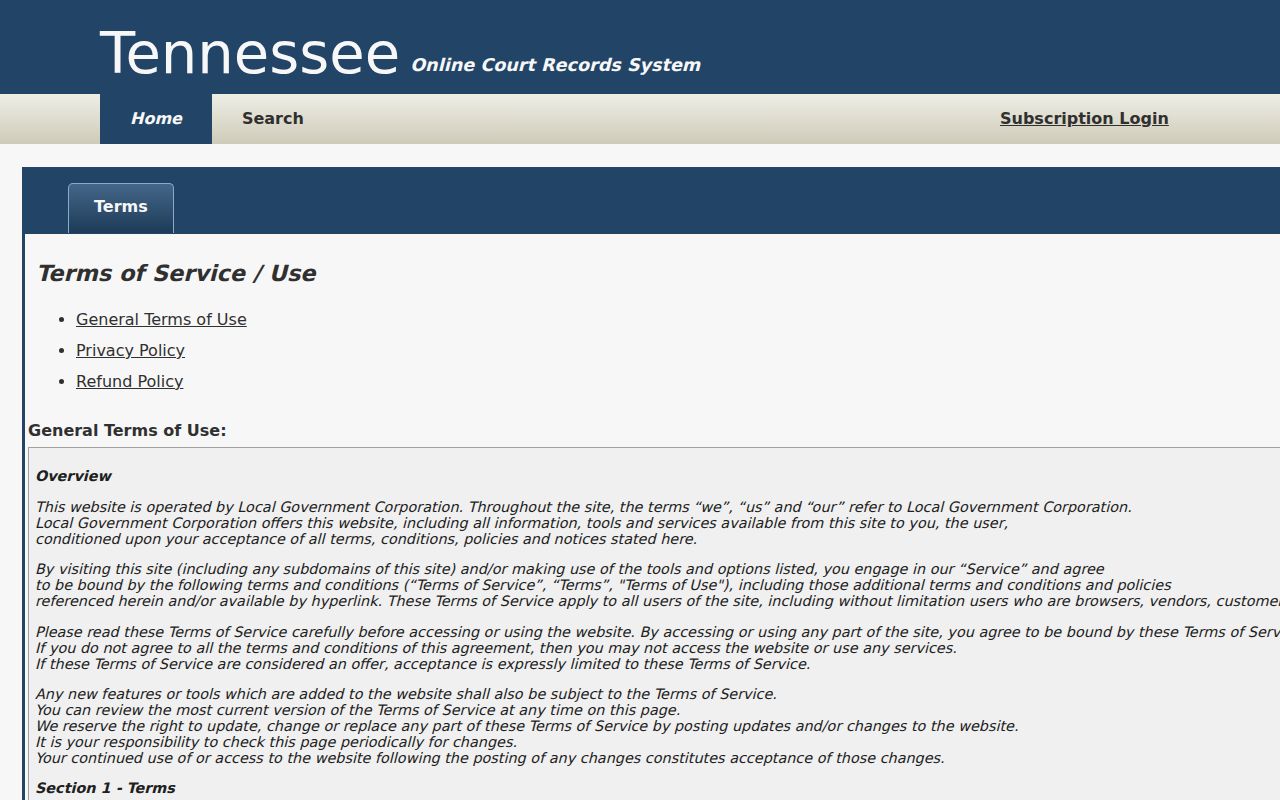
The Tennessee Public Court Records System, known as TnCIS, gives the public a search interface, but only for participating offices. Hancock County does not appear on its office list. Because selecting a court office is required, TnCIS cannot serve as a working Hancock County trial docket search for now.
The TnCIS search help documents the system thoroughly. It accepts several search criteria, caps results at 2,500 rows, uses the first ten query words, and lets you filter visible results. The interface and its terms warn about currency and accuracy. All useful knowledge if Hancock County joins later. Until then, a local case lookup stays a clerk request. The official search form shows fields that apply only when a participating office is available.
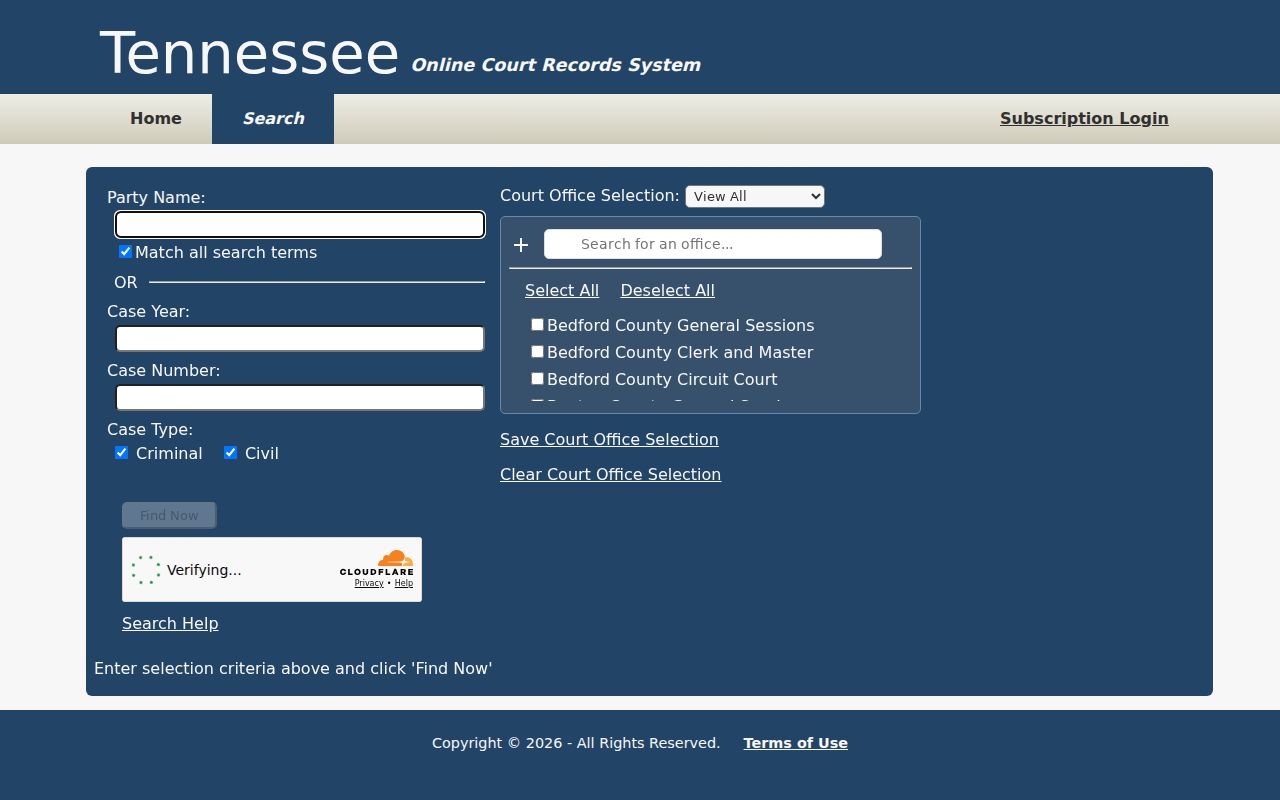
The office selector controls coverage. It is not a promise that every Tennessee county can be searched there. The official help page spells out the query and result limits a careful searcher should know.
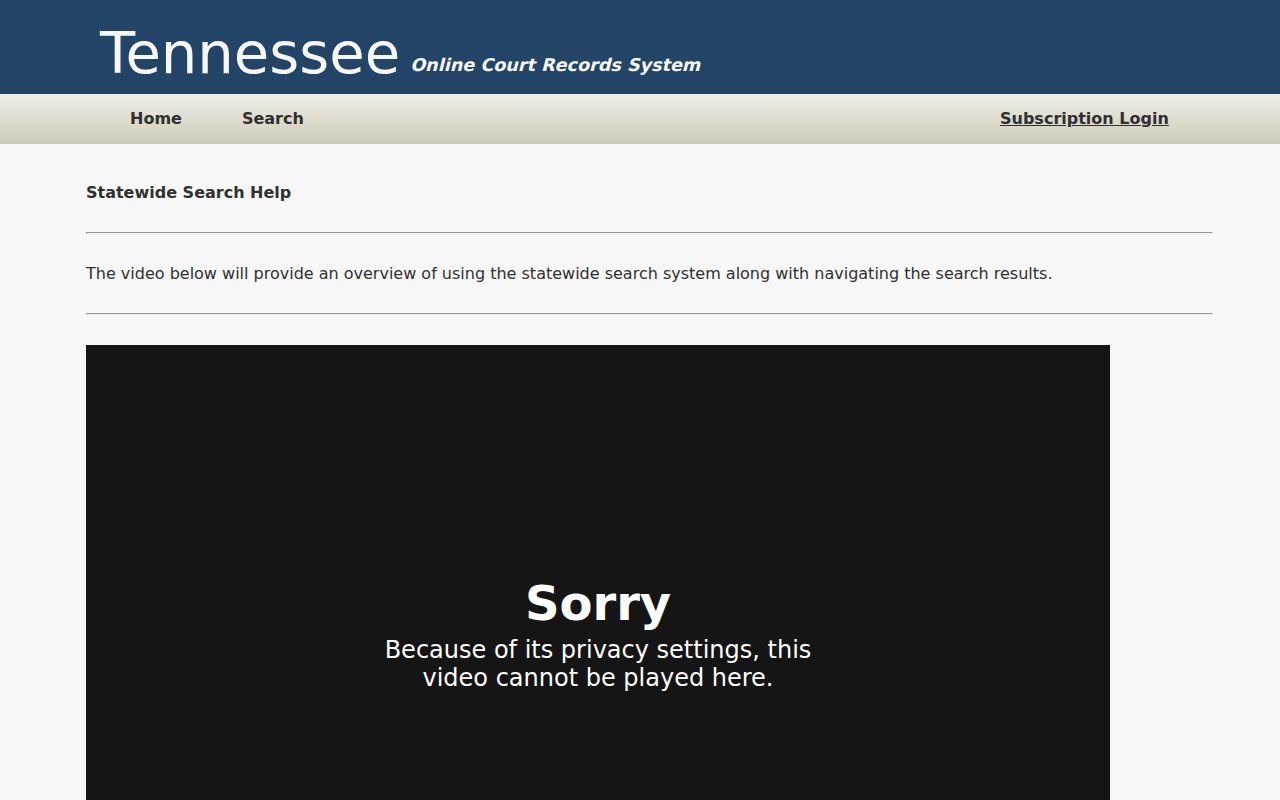
Those instructions explain the interface. They cannot overcome Hancock County's absence from the office list. The official participation page marks the current boundary of the system.
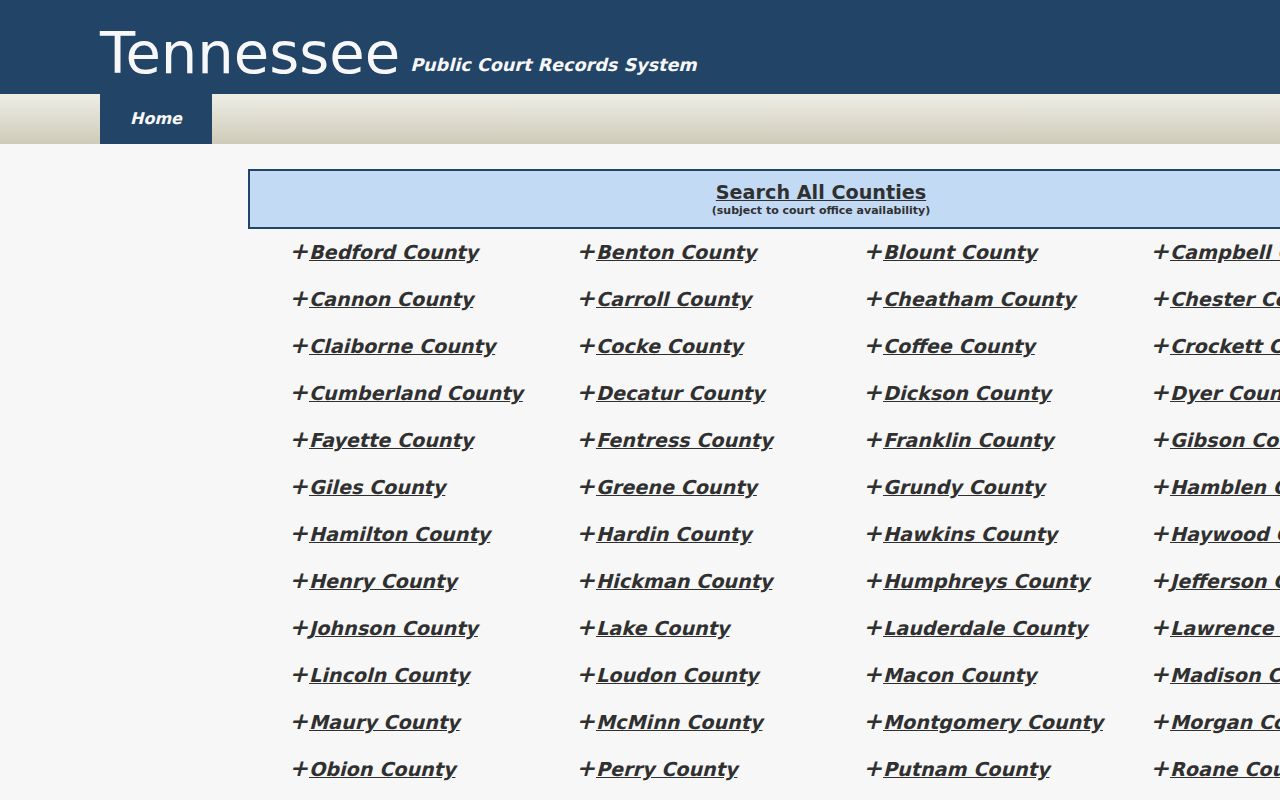
Recheck that source before claiming Hancock County has gained public online access.
Hancock County vs Statewide Case Search
"Statewide" covers only the listed offices or the separate appellate system. It never makes every Tennessee trial file searchable. Local requests reach Hancock County clerks directly and can lead to the actual trial file. Public Case History reaches Tennessee appellate events. TnCIS reaches participating trial offices, and Hancock is not one of them.
| Statewide tool | Hancock County clerk route |
|---|---|
| Participating TnCIS offices or appellate cases | Hancock Circuit, Criminal, General Sessions, or Chancery records |
| Searchable index and some linked documents | Routing, inspection, docket copies, and certified documents |
| Best for a known appellate matter | Best for a known local trial matter |
Hancock County Appeals and Federal Cases
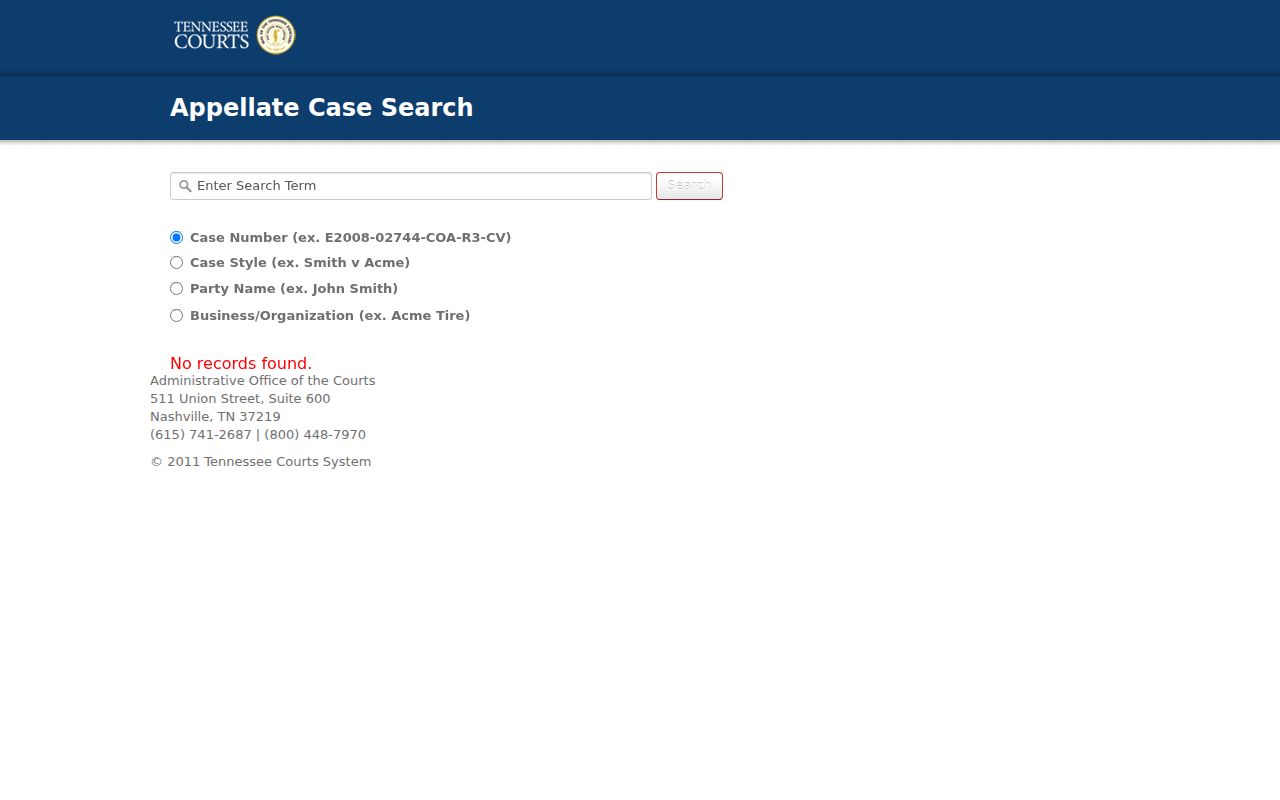
Appeals leave the local docket behind. Once a Hancock County case reaches an appellate court, its filings live in a state online system. They sit there rather than in the county clerk's trial files. The Tennessee Public Case History site covers that appellate layer. Searches accept Case Number, Case Style, Party Name, or Business/Organization. Results show the Date, the Event, the Filer, and a PDF link. Coverage begins only after stated cutoff dates. Many Hancock County trial documents never appear there. The trial court record stays a separate search.
Federal cases follow a separate path. Use PACER or the Eastern District of Tennessee, Greeneville Division, for those filings, because federal access, fees, and redaction rules sit entirely apart from the Hancock County court docket.
Restricted Hancock County Case Access
Not every court record is open to the public. Tennessee Supreme Court Rule 34 backs inspection of public court records. A statute, rule, or court order can still restrict them. A public case listing does not open every attachment. Sealed filings, juvenile material, protected personal data, judicial work product, expunged information, and some family records can be withheld or redacted.
A blank result proves little. It can reflect the wrong court, an archived paper file, a nonparticipating system, or a different spelling. Sealing, expungement, or confidentiality can also explain it. Ask the responsible Hancock County clerk. A public redacted copy may still exist, and the clerk can name the authority behind any denial. For the filing history behind a case you locate, the Hancock County court record search lays out copy and certification routes.
Verify Every Hancock County Match
Get your details straight before you call. Criminal and General Sessions questions should name the paper. That could be an indictment, summons, citation, preliminary hearing record, probation entry, judgment, or appeal. Chancery questions should name the matter. That may be divorce, probate, guardianship, real estate, a trust, or some other equity issue. Staff in Hancock County handle many files with similar names. This detail also keeps a court docket request away from the County Clerk. Its portal covers vehicles and titles instead.
Ask for both numbers when a case moved. The Circuit Court Clerk builds a full record once a Hancock County case goes up on appeal. Public Case History lists appellate events, yet the local clerk keeps the trial file. Federal matters run through PACER and the Eastern District of Tennessee's Greeneville Division. None of those systems feed into the Hancock County docket.
Read dates with care. A filing date marks the day the clerk accepted a paper. An entry date may come later. Hearings get reset, and an older docket event may not reflect a same-day change. Confirm the source of the current setting. It may be a Notice of Hearing, an entered order, or word from the clerk. A phone call alone will not move it.
Treat docket language literally. A motion asks for an order; it is not a ruling. A minute entry notes activity. A final judgment states a disposition. A rule docket tracks compliance, and an execution docket tracks enforcement. Hancock County publishes no public legend for its shorthand. When an entry confuses you, copy the exact text and ask the clerk.
A file may still sit on paper, wait for scanning, or rest in an archive. It may also live in another division. Some records are sealed, redacted, expunged, or confidential. The Tennessee State Library and Archives assists with older county materials. It cannot replace the current clerk. Give staff the year range and the paper you want. They can then explain retrieval and cost.
Never trust a name by itself. Check the court, the case number, the filing year, the case type, and the public caption. When the outcome matters, set the docket event beside the signed judgment or order. A charge is not a conviction. "Disposed" is not a plain answer about what happened. The TnCIS terms assigned to this page also warn that online information can lag or contain errors.
Write down the retrieval date and the source office. If a legal or agency use requires proof, order the actual certified document from the originating clerk. Certified copies carry weight that printouts do not.
Note: Never send Social Security numbers, medical facts, juvenile details, or confidential victim information through an open email search request.